
All Eyes on NFP and CPI this Week

- The brief government shutdown has made this week much more important than originally planned. The delayed January jobs report will be released Wednesday and January CPI will be released on Friday (the 13th no less). That lineup alone would be considerable but add in December Retail Sales tomorrow and we’ll cover plenty of bases, from the state of the labor market to inflation, to consumer spending. It all makes for a consequential week, so strap in. Currently, the 10yr is yielding 4.23%, up 3bps, while the 2yr is yielding 3.50%, up 1bp on the day.
- After last Thursday’s deluge of second-tier data that all pointed to slowing in the labor market, Wednesday’s BLS Nonfarm Payrolls release becomes even more consequential. Expectations are for headline job growth of 70 thousand vs. 50 thousand in December. However, after last week’s disclosure by ADP that found only 22 thousand new private sector jobs and Revelio Labs 13 thousand job decrease, it increases the importance of Wednesday’s numbers. Perhaps most importantly, the unemployment rate is expected to remain unchanged at 4.4%, and that may be the one statistic that matters most to the Fed as they wait for further inflation improvement before cutting rates again. Do they have that time? Last week’s second-tier labor market numbers say maybe not, but the BLS numbers will be what they focus on most.
- Remember too, this release will bring with it the benchmarking of more complete hiring data that is likely to show that job growth was even lighter in 2025 than originally reported. In summary, it will prove quite important to whether the Fed can reliably wait until mid-year before considering another rate cut.
- January CPI will be released Friday which bookends with the jobs report to provide plenty of first-tier fodder for investors and the Fed to consider. Expectations are for both headline inflation and core (ex-food and energy) to increase 0.3% MoM with the YoY headline rate dipping from 2.7% to 2.5%, and core from 2.6% to 2.5% as gaudy 0.5% and 0.4% MoM January 2025 prints roll out of the calculations. The bad news there is that in the following months it will get more challenging with a string of 0.1% and 0.2% monthly prints to roll off. Thus, further gains after January will require a consequential monthly dip in the 0.1% to 0.2% range. With OER (the single biggest CPI component) looking to continue softening this year, it’s possible to see such friendly prints in the first half of this year, but that obviously remains to be seen in actual results.
- As if those two reports weren’t big enough to carry the week, we have December Retail Sales to provide the consumer spending look. Expectations are for sales to increase 0.4% vs.0.6% in November. Sales ex-autos and gas are expected to increase 0.5% vs. 0.4% prior. The Control Group (that feeds directly into GDP) is expected to increase 0.5% vs. 0.4% in November which will complete a solid quarter of consumer spending. More importantly to the Fed will be the January spending numbers which the Census Bureau has yet to provide a release date.
- Last Friday, the University of Michigan released its preliminary February Sentiment findings with slightly better results than January. Consumer sentiment was essentially unchanged, but better than expectations as the headline sentiment measure printed at 57.3 vs. 56.4 prior and 55.0 expected. It remains, however, 20% below January 2025. You could split sentiment readings between consumers with the largest stock portfolios where sentiment soared, while it stagnated and remained at dismal levels for consumers without stock holdings.
- While the current sentiment level is the highest since August 2025, recent monthly increases have been small, and the overall level of sentiment remains historically low. Concerns about the erosion of personal finances from high prices and elevated risk of job loss continue to be widespread. We wrote on Friday about the risk that further hits to stock and risk asset prices could have on consumer spending, and right on cue Friday provided a significant rebound in prices, but the risk to consumption remains and is a concern shared by respondents to this survey.
- Finally, year-ahead inflation expectations fell from 4.0% last month to 3.5% this month, the lowest reading since January 2025. This month’s reading still exceeds those seen in 2024 and remains well above the 2.3-3.0% range seen in the two years pre-pandemic. Long-run inflation expectations inched up for the second straight month, from 3.3% last month to 3.4% this month. In comparison, readings ranged between 2.8% and 3.2% in 2024 and were below 2.8% throughout 2019 and 2020. That “stickiness” in long-run inflation expectations will be a concern for the inflation hawks at the Fed.
Univ. of Michigan Sentiment Survey Finds Sentiment Gap Widening in February for Those With and Without Stocks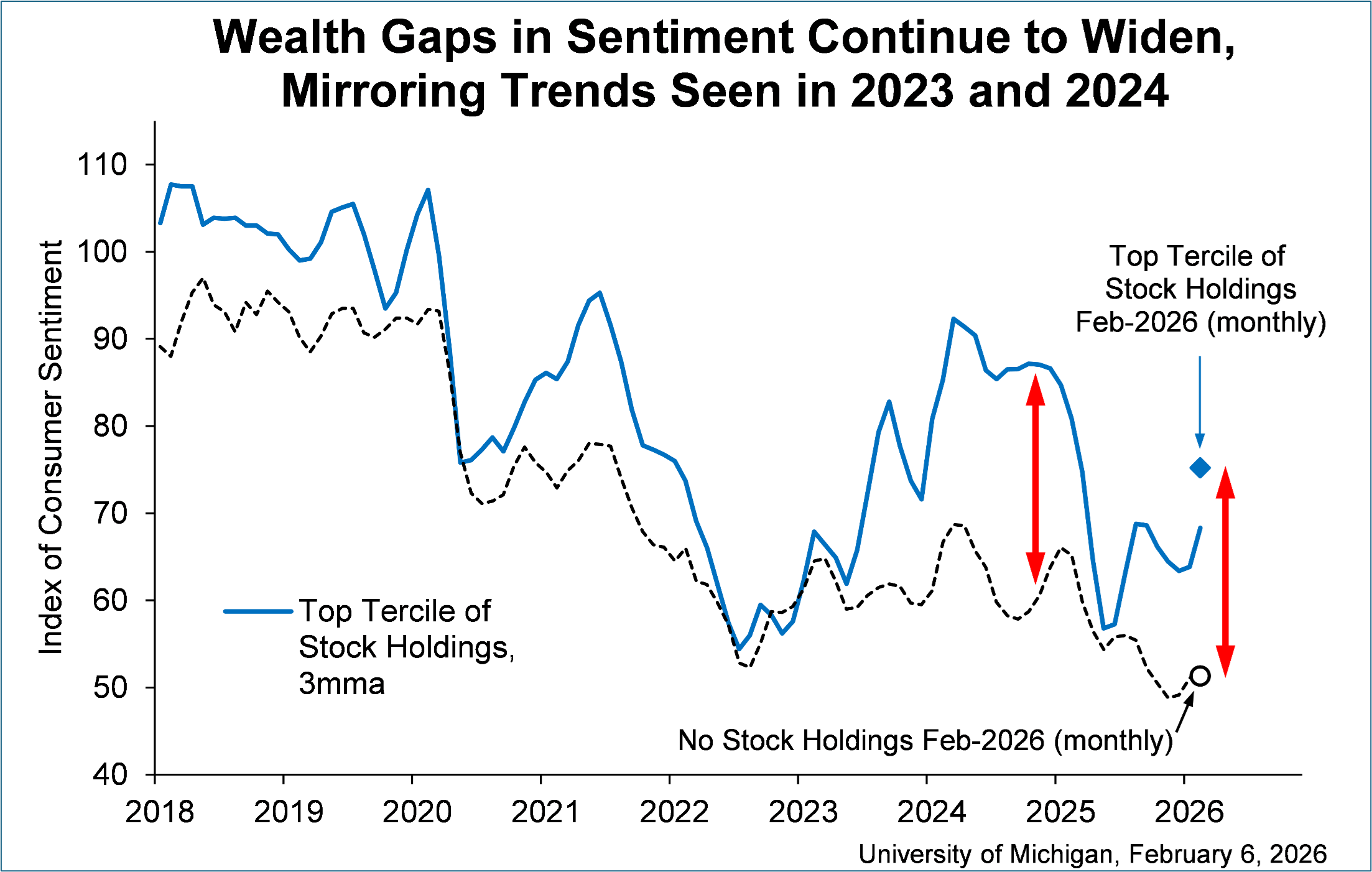 Source: Univ. of Michigan
Retail Sales YoY – December Retail Sales Due Tomorrow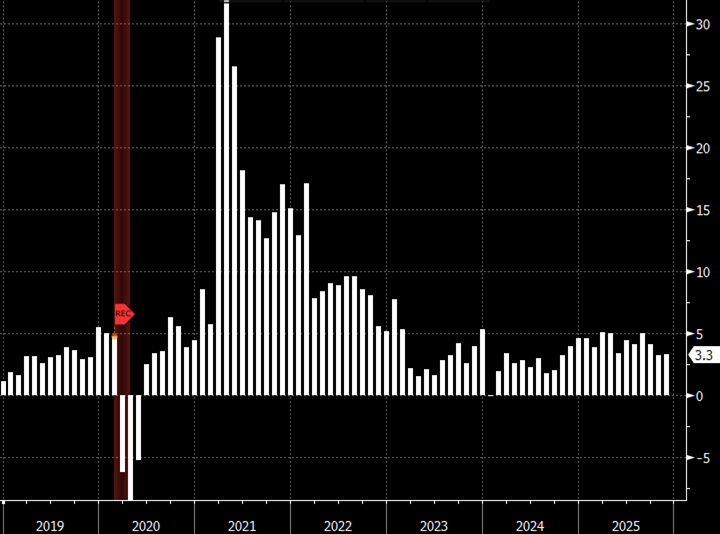 Source: US Census Bureau
January Nonfarm Payrolls due on Wednesday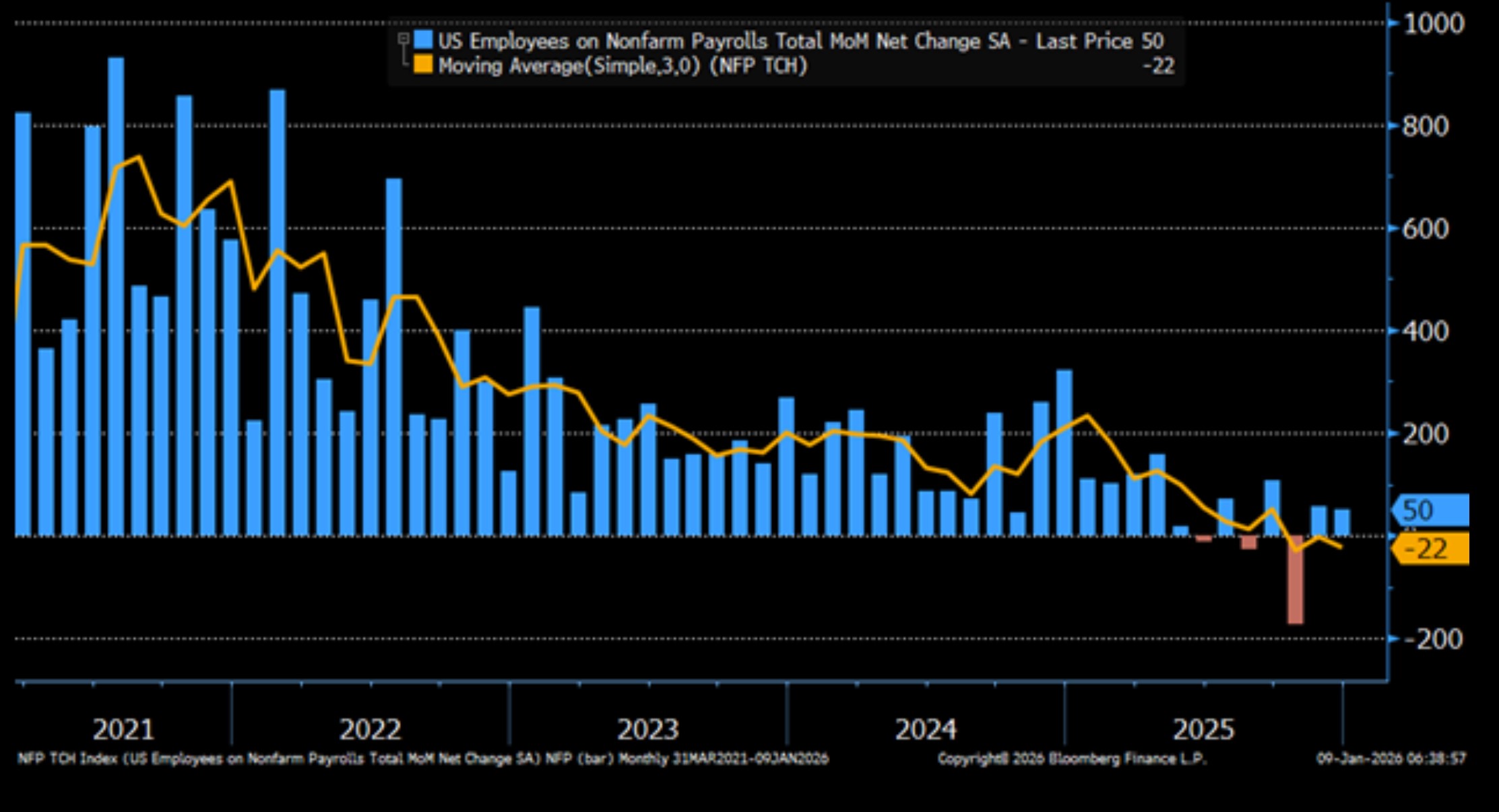 Source: BLS
January CPI and Core CPI due on Friday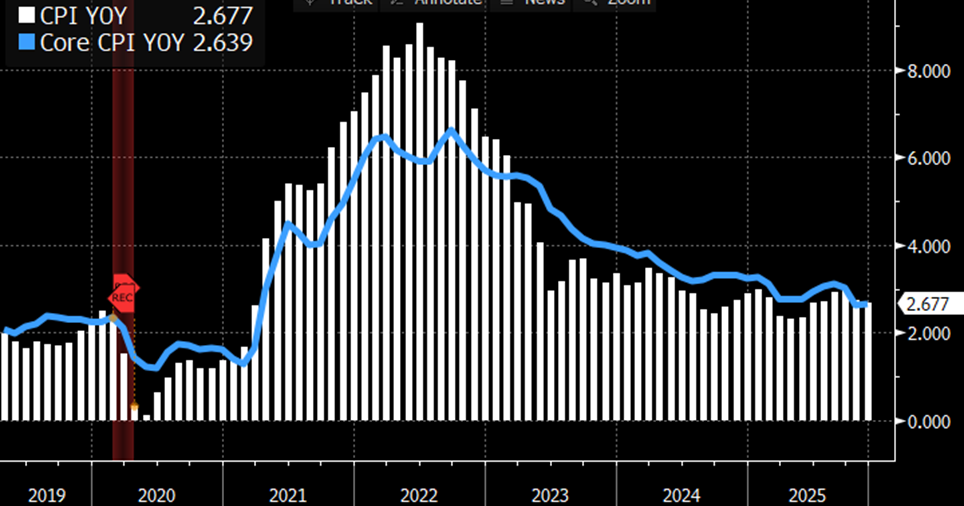 Source: BLS
Securities offered through the SouthState | DuncanWilliams 1) are not FDIC insured, 2) not guaranteed by any bank, and 3) may lose value including a possible loss of principal invested. SouthState | DuncanWilliams does not provide legal or tax advice. Recipients should consult with their own legal or tax professionals prior to making any decision with a legal or tax consequence. The information contained in the summary was obtained from various sources that SouthState | DuncanWilliams believes to be reliable, but we do not guarantee its accuracy or completeness. The information contained in the summary speaks only to the dates shown and is subject to change with notice. This summary is for informational purposes only and is not intended to provide a recommendation with respect to any security. In addition, this summary does not take into account the financial position or investment objectives of any specific investor. This is not an offer to sell or buy any securities product, nor should it be construed as investment advice or investment recommendations.


