
Can the Fed Achieve Price Stability Without a Recession?

- The light data calendar allows for headlines from UN speeches and Fed Speak to dominate the week, and so far, while some speeches have been provocative, the Treasury moves have been muted. That’s because oil prices have been well behaved as President Trump talked of renewed peace negotiations/discussions with the Iranians. The President of Iran will speak today at the UN so we will see if he reflects the same optimism that a peace deal can be had. While the calm oil markets have Treasuries in the same state, the 10yr continues to flirt with 5.00% but so far remains with a 4-handle, but just barely. The economic data today will be confined to the S&P Global preliminary PMIs for September. We discuss that report in more detail below. Currently, the 10yr is yielding 4.99%, up 2bp, while the 2yr is yielding 4.79%, up 1bp on the day.
- At last week’s FOMC press conference, Chair Warsh said that the two mandates, price stability and full employment, don’t have to be in conflict and used the experience of the post-Covid hiking cycle that saw inflation retreat from post-Covid highs but that retreat in price pressure didn’t damage the labor market as unemployment remained well contained. The issue here is that then, we had strong labor demand coming out of Covid. Recall, the JOLTS job openings reached 12 million in 2022 when the number of unemployed was closer to 5.5 million, or a 2 to 1 ratio of job openings to unemployed. Today, that ratio is closer to 1-to-1. Thus, the excess labor demand is gone and there is practically no buffer in which you can reduce labor demand today and not see unemployment tick up.
- Chicago Fed President Austin Goolsbee opened the week with concerns that inflation moving to 2% may be a tougher task given we are experiencing a series of extended supply shocks that make it harder to “look through”. The question Goolsbee didn’t answer is whether he thinks it is possible to achieve the price stability mandate (i.e., return inflation to 2%) without throwing the economy into recession. While Goolsbee didn’t offer an answer to that question we’ll give it a go. We think it’s still possible to improve the price stability mandate, that is we think rate hikes can reduce demand to an extent that inflation dips lower to 2% (but perhaps not completely to 2%) and not tip the economy into recession. The reason we believe that second part is two big drivers of economic growth, AI capex buildout and healthcare employment, should be relatively immune to rate hikes.
- Hyper-scaler budgets have already been set for 2027 and most see expenditures increasing over 2026 levels. That spending will largely continue regardless of Fed rate hikes. Second, one of the big growth sectors in jobs in the last year has been in healthcare, specifically home healthcare and assisted living care. These reflect the aging demographic of the boomer generation that will continue to happen regardless of rate hikes. Thus, with those two big engines rather insulated from rate hike fallout we think a recession in a higher rate environment is less likely. But make no mistake, it probably does a number on consumer discretionary spending, and if it dents stock market values, which it likely would, the K-shaped economy of conspicuous consumption by the well-heeled class will have a harder time of it in 2027 and that will dent GDP growth.
- Yesterday, ADP published its weekly Pulse Report of weekly changes in private payrolls. For the week ending Sept. 5, private payrolls grew by 20 thousand, that is the highest weekly total since June 20 when it touched 21 thousand. The weekly figure is a four-week average seasonally adjusted and when spread across the month indicates a total near the 60 to 80 thousand range that private payrolls have been growing in recent BLS Nonfarm Payroll Reports. Thus, the job market continues to cruise along at a decent clip, another indication that a recession is not appearing on the horizon.
- Finally, later this morning we’ll get the first of the September activity report with the preliminary S&P Global PMI series. The August report was solidly in expansion territory (I.e., > 50) for both the manufacturing and services sectors. Expectations are that they both again exceed 50, but whether they retreat some from August levels, manufacturing 53.9 and services at 56.5, or build on that activity is the real question. The report is due at 9:45am ET.
Odds for Another Hike at the Oct. FOMC Meeting – Moving Higher from 50% to 55%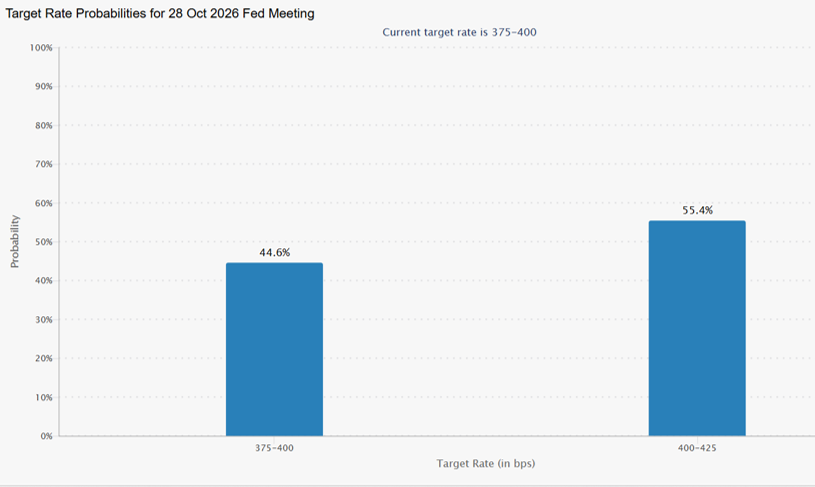 Source: CME Group
Odds for Hikes at the Dec. FOMC Meeting – Two or More Hikes at 89%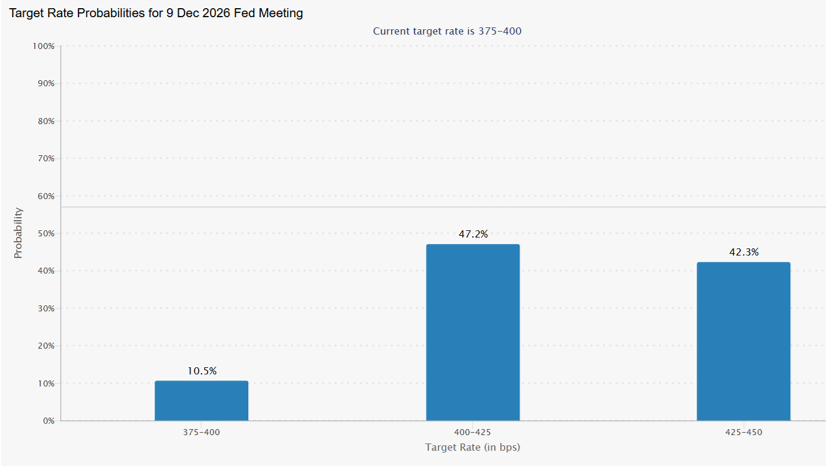 Source: CME Group
WTI Crude Oil – Retreating This Week as Talk of Iran Peace Negotiations Circulate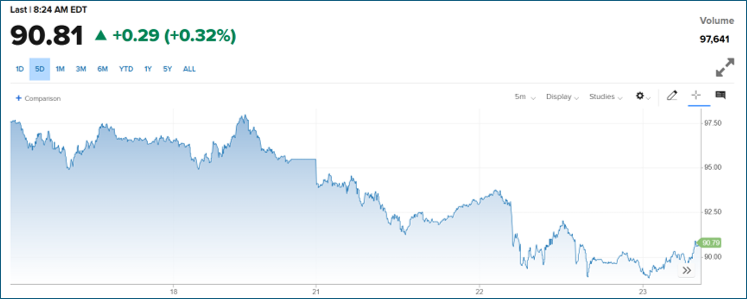 Source: CNBC
Securities offered through the SouthState | DuncanWilliams 1) are not FDIC insured, 2) not guaranteed by any bank, and 3) may lose value including a possible loss of principal invested. SouthState | DuncanWilliams does not provide legal or tax advice. Recipients should consult with their own legal or tax professionals prior to making any decision with a legal or tax consequence. The information contained in the summary was obtained from various sources that SouthState | DuncanWilliams believes to be reliable, but we do not guarantee its accuracy or completeness. The information contained in the summary speaks only to the dates shown and is subject to change with notice. This summary is for informational purposes only and is not intended to provide a recommendation with respect to any security. In addition, this summary does not take into account the financial position or investment objectives of any specific investor. This is not an offer to sell or buy any securities product, nor should it be construed as investment advice or investment recommendations.


