
Inflation Week Delivered a Second Cool Month

- Inflation week delivered a second straight month of well-behaved prices, and while investors didn’t get too far ahead after one month of cool results in June, the follow-up was enough to move odds of a September rate hike down to just 1-in-3. That said, we still have August inflation and payroll data to absorb before the September 16th FOMC rate decision. Thus, the odds could shift after those reports, but it would take quite the reversal in August to convince four additional FOMC members on top of the three who called for hikes at the July 29th meeting to vote for a September rate hike. We also have the Jackson Hole central bank symposium later this month (Aug. 27-28th) where Fed Chair Warsh will have a chance to continue his quiet act or offer up a thought or two on where he thinks rates should go. Currently, the 10yr is yielding 4.65%, up 1bp, while the 2yr is yielding 4.12%, down 2bp on the day.
- Inflation week delivered a second straight month of well-behaved prices, and while investors didn’t get too far ahead after one month of cool results in June, the follow-up was enough to move odds of a September rate hike down to just 1-in-3. That said, we still have August inflation and payroll data to absorb before the September 16th FOMC rate decision. Thus, the odds could shift after those reports, but it would take quite the reversal in August to convince four additional FOMC members on top of the three who called for hikes at the July 29th meeting to vote for a September rate hike. We also have the Jackson Hole central bank symposium later this month (Aug. 27-28th) where Fed Chair Warsh will have a chance to continue his quiet act or offer up a thought or two on where he thinks rates should go. Currently, the 10yr is yielding 4.65%, up 1bp, while the 2yr is yielding 4.12%, down 2bp on the day.
- Yesterday brought us July PPI and it was close to expectations, much like CPI, although some line items heading into PCE were a bit hotter. Headline Final Demand was unchanged vs. 0.2% expected but up from the -0.1% dip in June. The YoY rate decreased from 5.5% to 4.7%, below the 4.9% expected. Ex-food, energy, and trade increased 0.4% vs. 0.1% in June, and above the 0.3% expectation. The YoY rate fell to 4.7% vs. 5.0% in June. While the headline numbers were generally at or below expectations, certain line items that feed into PCE, like portfolio management fees (+6.5% vs. 0.6% June) and outpatient care (+0.9% vs. -0.1%) were hotter than June which will add upward pressure to PCE estimates (see table below). Right now, analysts are looking at a high 0.2% to low 0.3% MoM for core PCE. We still have Import/Export Prices due next Tuesday and that will finish the inputs into PCE, so those estimates are still a work-in-progress.
- This morning, the latest Retail Sales report was weaker than expected, as the consumer may be showing the first signs of buckling under the pressure of higher prices and slowing wage gains. Headline sales decreased -0.6%, missing the modest 0.1% expectation and well short of the 0.2% June increase. Sales ex autos and gas were also down at -0.2%, missing the 0.3% expectation and short of the 0.4% June increase. The core spending category, the so-called Control Group, posted a -0.4% drop, largest this year and well below the 0.4% increase in June. In a sign of possible consumer weakness, the control group drop is the first since September when it dipped a slight -0.1% and breaks a nine-month streak of positive control group prints. In summary, it was a weak month of spending by the US consumer and could be the first signs that they are growing weary of high gas and other prices. There was a big drop in non-store retailers (read: Internet sales) and that may be the timing of Amazon Prime Day which occurred in June. The Fed will not want to see a repeat of this in the August report as the weakness will complicate a decision to hike rates if inflation rebounds.
- Finally, Initial Jobless Claims remained docile despite initial claims increasing from 200 thousand to 209 thousand. In a sign of the static nature of claims, the 4-week moving average was unchanged at 199 thousand. While claims increased from the prior week, the weekly total remains low by historical standards and has yet to signal a material pick-up in layoffs. While hiring and job growth have slowed considerably, layoffs remain an isolated event to this point. As we’ve mentioned before, if there’s another shoe to drop in labor market stability this indicator will be the first to signal that but with the 4-week average unchanged this speaks to a continuation of the low-fire environment.
- Continuing Claims were quiet as well with the August 1st week seeing claims decrease from 1.799 million to 1.777 million, below the 1.794 million expected. The series started 2026 at 1.900 million and has been in a gradual downtrend this year, with “gradual” being the operative word. Just like initial claims, continuing claims have yet to signal a material increase in difficulty finding new work. Thus, the Fed has the freedom of waiting for inflation improvement as labor market stability remains decent.
- The annual Jackson Hole Economic Symposium is set for Aug. 27-29, and the topic is “Financial Innovation: Implications for Payments and Policy.” If Fed Chair Warsh wants to remain coy about future rate decisions this year’s topic gives him that chance, and instead of monetary policy we hear more about the latest fintech opportunity and/or crypto challenges. Will he continue with the “no comment” approach to a Fed reaction function and/or forward guidance? Unfortunately, we think he’ll stick to his schtick of being less forthcoming than previous chairs, but this is a unique opportunity to inform fellow central bankers, not to mention the investment community, as to current Fed thinking. We’ll see how it pans out.
July Retail Sales – Control Group Contracts for First Time Since September, is the Consumer Buckling?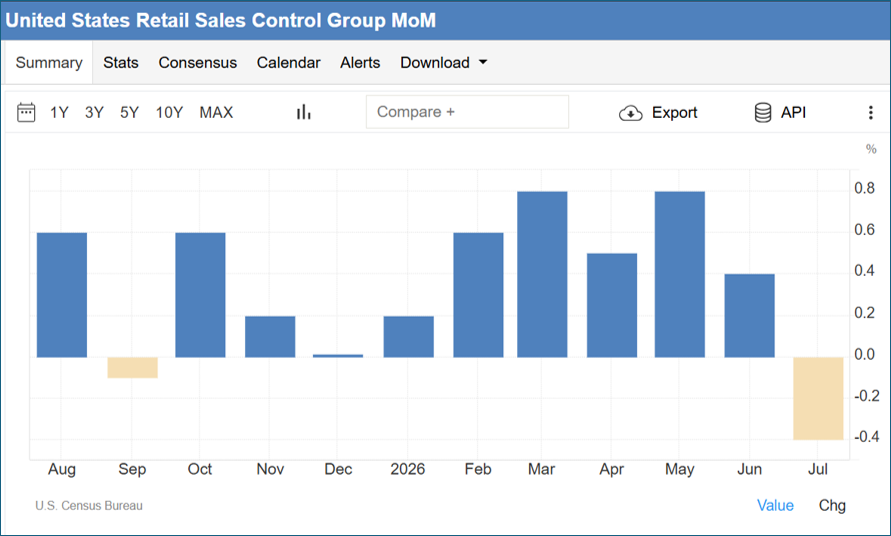 Source: US Census Bureau
Initial and Continuing Jobless Claims – The Low-Fire Trend Continues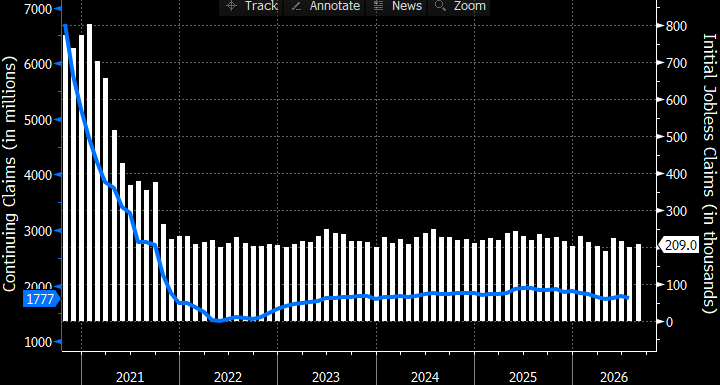 Source: Dept. of Labor
PPI Components Used in PCE Calculation – While Headline PPI Was Cool, PCE Pieces Not Quite as Much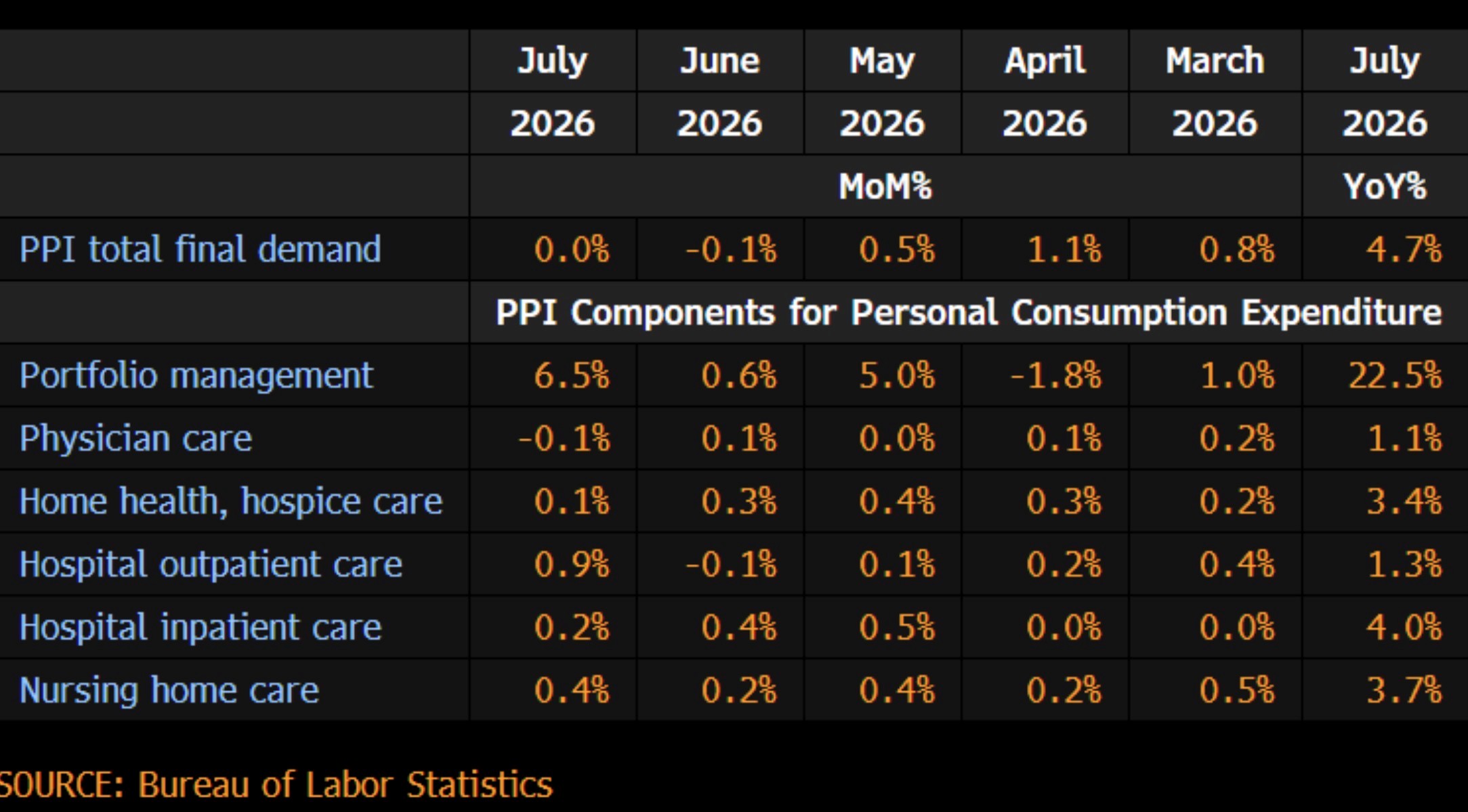 Source: BLS
Super Core Services Ex-Housing – PCE Clearly Lagging the Recent CPI Improvement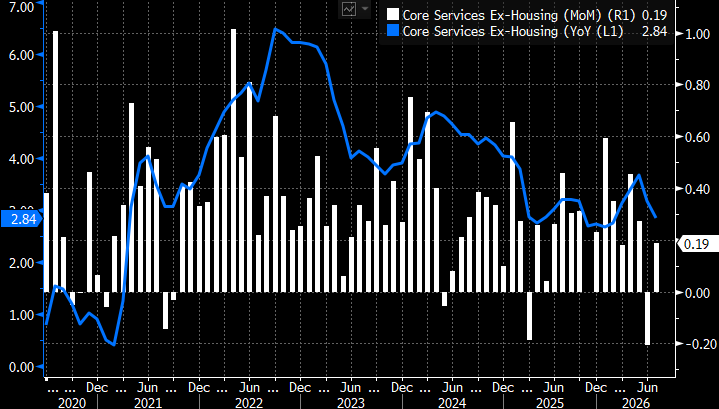 Source: BLS
Securities offered through the SouthState | DuncanWilliams 1) are not FDIC insured, 2) not guaranteed by any bank, and 3) may lose value including a possible loss of principal invested. SouthState | DuncanWilliams does not provide legal or tax advice. Recipients should consult with their own legal or tax professionals prior to making any decision with a legal or tax consequence. The information contained in the summary was obtained from various sources that SouthState | DuncanWilliams believes to be reliable, but we do not guarantee its accuracy or completeness. The information contained in the summary speaks only to the dates shown and is subject to change with notice. This summary is for informational purposes only and is not intended to provide a recommendation with respect to any security. In addition, this summary does not take into account the financial position or investment objectives of any specific investor. This is not an offer to sell or buy any securities product, nor should it be construed as investment advice or investment recommendations.


