
Jackson Hole Awaits

- The subject of higher bond yields moved centerstage last week and given numerous explanations for the move, and a planned Treasury buyback of debt, it’s likely that the topic will continue to foment, discussion, consternation, and market volatility this week. Away from that ongoing dustup, central bankers across the developed economies will gather in Jackson Hole, Wyoming this week for their annual Central Bank Symposium where Fed Chair Warsh will give the keynote address Friday morning. Investors are hoping he offers up a more expansive discussion on where policy is likely to go under the Warsh Fed compared to the light-on-details discussions he’s delivered in two post-FOMC press conferences. Before then, the data highlight will be PCE inflation numbers on Wednesday, but after last week’s July FOMC minutes the Fed will most likely be in data-gathering mode well into September, waiting on the August CPI and jobs reports, before deciding on a course of action at the September 16 FOMC meeting. Currently, the 10yr is yielding 4.71% up 3bp, while the 2yr is yielding 4.24%, up 1bp on the day.
- Another new development greeting investors this week is apparently a trade war with, wait for it, Canada. Negotiations over the latest round of threatened US tariffs appeared to be heading to a successful conclusion, but alas, it blew up over the weekend with Prime Minister Mark Carney announcing late changes and additions to terms which led to the impasse. Where this goes from here is anyone’s guess but for those hoping tariffs would be off the menu of things to worry about in 2026, and beyond, well, they’re apparently back on.
- On to less controversial subjects, the obvious big data report this week will be Wednesday with the Fed’s preferred inflation measure, PCE, for July. It’s the last of July inflation numbers and coming after the FOMC minutes that stressed the need for more inflation data will be a key release. Expectations are for overall PCE inflation to increase 0.1% MoM vs. -0.1% prior month and 3.6% YoY vs. 3.7% YoY in June. Core PCE is expected to have increased 0.2% MoM vs. 0.1% prior month and 3.3% YoY, unchanged from June.
- If the expected coolish inflation numbers are delivered, it will make the case somewhat easier for a continued pause at the September FOMC meeting. It should be noted, however, that the clinching decision will most likely be the August CPI and jobs reports. Thus, this report will only go so far in settling the issue with the ultimate decision coming just before the FOMC meeting in mid-September after the August figures arrive.
- The same report carries with it the personal income and spending numbers for July. Income is expected to have increased 0.2%, same as in June, and spending is expected to have also increased 0.2% vs. 0.3% the prior month. Spending adjusted for inflation is expected to have risen 0.1% vs. June’s 0.4% gain. While those figures, if realized, point to a decent month of income and consumption, they won’t quiet concern generated by the weak retail sales report and amplified by Wal-Mart’s disappointing 2nd quarter earnings. If spending falls short of expectations it will only increase concern that the consumer is finally starting to falter. So, there is a bit of an asymmetric risk on this one. If spending is confirmed to be weaker, it will make the Fed’s job more difficult as it will have to contend with a possibly slowing economy and sticky inflation.
- Before the PCE information, the Conference Board will provide the latest consumer sentiment readings for August on Tuesday. Recall, the University of Michigan’s latest read from last week was disappointing as higher gas prices early in the month dimmed consumer outlooks in that report. Expectations for this one are for a slight decrease in sentiment from 90.8 to 90.2. This report has less of a direct connection to gas prices and sentiment so it may provide a “cleaner” read on sentiment. While consumers often say one thing and do another, if sentiment is moving lower, it will only add to questions on whether they are starting to step away in the face of persistently high gas prices and slowing job growth and moderating wage gains. Again, if that is the case it will add complexity to the Fed’s goal of getting inflation back to 2%.
- Also on Wednesday, the second look at 2nd Quarter GDP will be released. Expectations are GDP remains at 1.5% annualized, same as the initial estimate, with personal consumption carrying the quarter at 3.2% growth, same as the first estimate. The quarterly PCE price index is expected to remain elevated at 6.2% annualized as higher gas and oil prices wreaked havoc on second quarter prices.
Odds for a September Rate Hike Creeping Up Slightly to 40%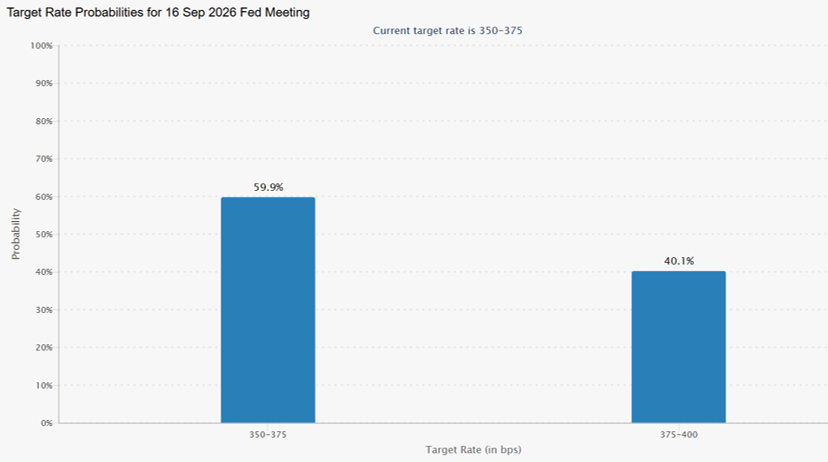 Source: CME Group
July PCE Update Due Wednesday – PCE Expected at 3.6% YoY and Core at 3.3% YoY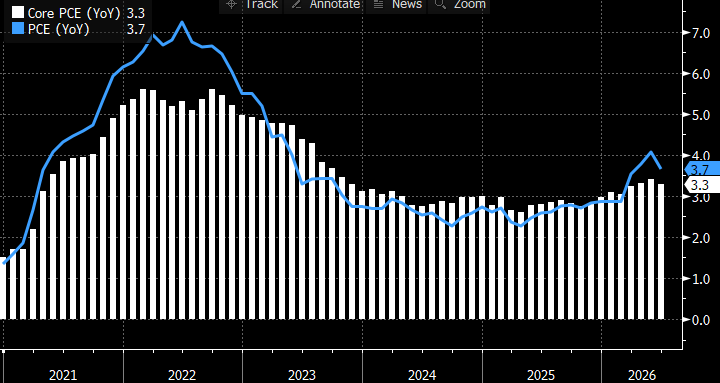 Source: BEA
Conference Board’s Consumer Sentiment August Update Due Wednesday – Slight Slippage Expected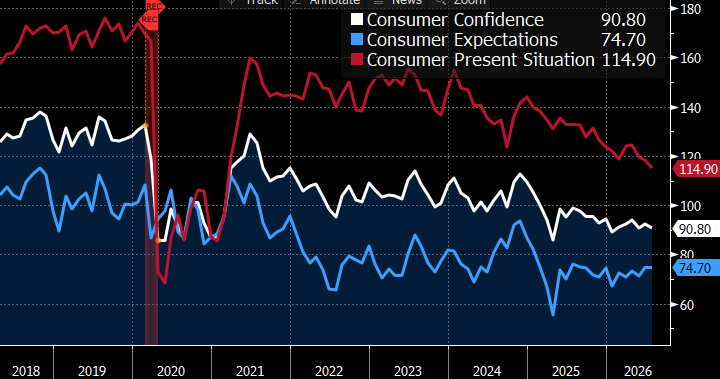 Source: Bloomberg
Second Estimate of 2nd Quarter GDP Due on Wednesday – Expected Unchanged from First Estimate of 1.5%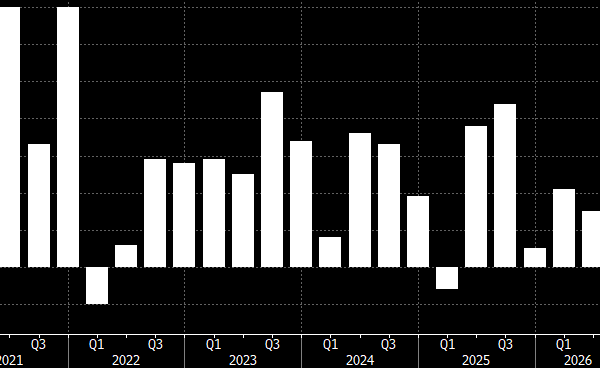 Source: BEA
Securities offered through the SouthState | DuncanWilliams 1) are not FDIC insured, 2) not guaranteed by any bank, and 3) may lose value including a possible loss of principal invested. SouthState | DuncanWilliams does not provide legal or tax advice. Recipients should consult with their own legal or tax professionals prior to making any decision with a legal or tax consequence. The information contained in the summary was obtained from various sources that SouthState | DuncanWilliams believes to be reliable, but we do not guarantee its accuracy or completeness. The information contained in the summary speaks only to the dates shown and is subject to change with notice. This summary is for informational purposes only and is not intended to provide a recommendation with respect to any security. In addition, this summary does not take into account the financial position or investment objectives of any specific investor. This is not an offer to sell or buy any securities product, nor should it be construed as investment advice or investment recommendations.


