
Oil Prices Rise and Job Growth Slows

- We mentioned on Monday, with the Fed in its pre-FOMC meeting blackout and a gap in meaningful economic releases, that we’re stuck focusing on Middle East developments and that has certainly been the case. The market continues to treat the escalation of attacks between Iran and the U.S. and rumors that the Houthi militia may create another oil chokepoint as distractions, or opening gambits for more serious negotiations. So, the moves we’re seeing are measured and not dramatic, but oil prices are moving more forcefully higher today (WTI $87/bbl, up $2.70 this morning) and the latest job growth numbers are slowing. Currently, the 10yr is yielding 4.64% up 1bp, while the 2yr is yielding 4.27%, up 1bp on the day.
- As mentioned above, oil and gas prices are moving higher as another potential bottleneck enters the chat. The Houthi rebels, an Iranian-backed militia group in Yemen, are threatening to attack Saudi tankers that attempt to navigate the Bab al-Mandab Strait near the Red Sea (see Map below). You may remember the Houthis as they were busy attacking Israeli-linked ships transiting the Red Sea following the October 7, 2023, attack by Hamas-led militants in Israel. Houthis are back again threatening Saudi Arabia, and with it, creating another potential chokepoint for Middle East oil and gas. As the Hormuz Strait has been locked down, a pipeline across Saudi Arabia has been increasingly used to move Persian Gulf oil to the Red Sea for water transit.
- It’s estimated that about 4 million barrels/day flow through the Red Sea, which if added to the 10 to 15 million barrels not flowing from the Persian Gulf, adds significantly to the shortage of global supplies. Two Saudi ships reportedly turned around in the Red Sea on Tuesday and steamed north towards the Suez Canal rather than risk a transit through the Bab al-Mandab. The Houthis have yet to fire on a ship in this latest dustup but have shown the willingness and capability from earlier attacks on Israeli-linked ships.
- Global daily oil demand averages 100 million barrels and the Strait of Hormuz shortfall has been partially offset by tapping global reserves and China aided the cause with a slowdown in its imports. Both of those are short-term measures while additional shortfalls will only add to pricing pressure. But for now, markets are treating all this with measured curiosity more than alarm but watch this space for further developments.
- One bit of data we did receive this week was the ADP Pulse Report which found 16,500 new private sector jobs for the week ending July 4th. The total is a four-week average, so the latest figure includes three weeks of June which agrees closely with the BLS estimates for June. In that report the BLS reported 57,000 new private sector jobs for the month. The ADP figure was the lowest weekly job growth since early March and the fourth straight week of decreasing totals. The prior week was 19,750. The low-hire, low-fire economy continues (see graph below).
- The markets aren’t reacting yet to the latest tariff news. Yesterday, President Trump said the U.S. would levy a new 50% tariff on Canada under Section 338 of the Smoot-Hawley Tariff Act. Yes, the same 1930 Smoot-Hawley bill that is widely blamed for deepening the Great Depression. In any event, the U.S. is claiming unfair treatment by Canada over auto, dairy, and alcohol exports to Canada. The implementation date is 30 days out, so markets are interpreting this as merely the opening salvo in some type of negotiations. While the initial market reaction has been muted, it is another pressure point that investors may have to contend with in August.
Add Bab al-Mandab Strait to the Oil Chokepoint Watch List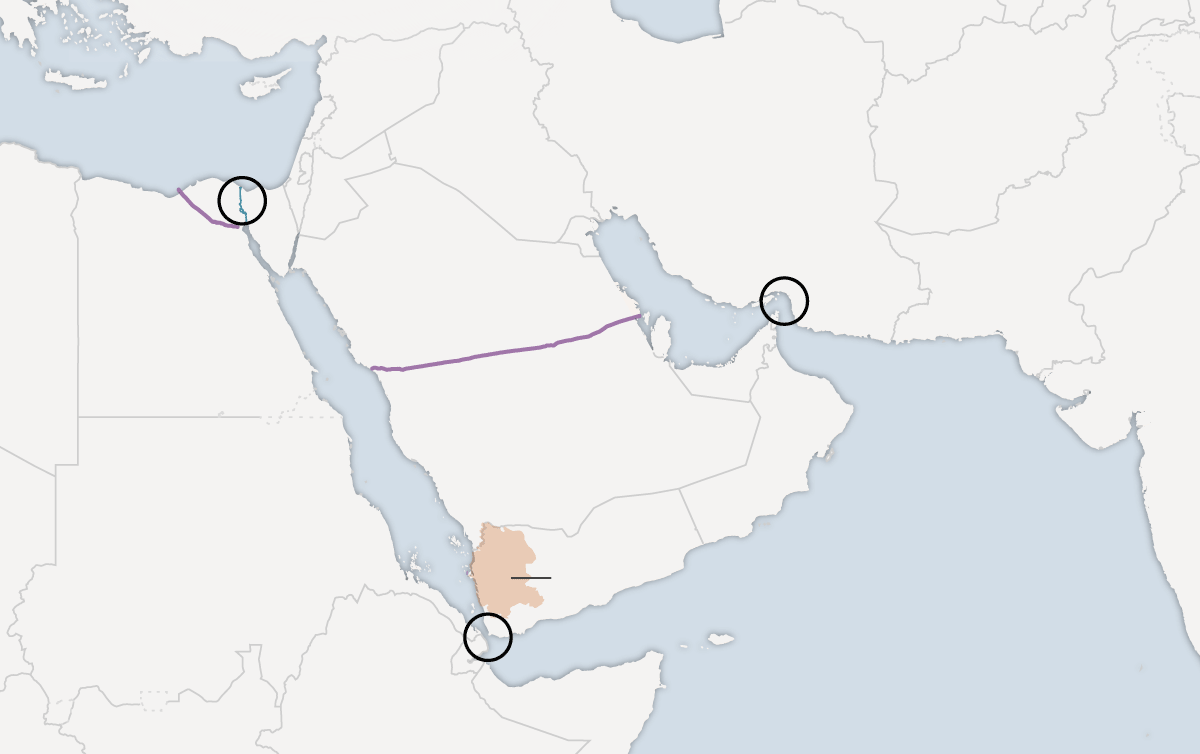 Source: MapBox
Strait of Hormuz Crossings and Brent Crude Prices – Oil Prices Rebounding as Crossings Dip Again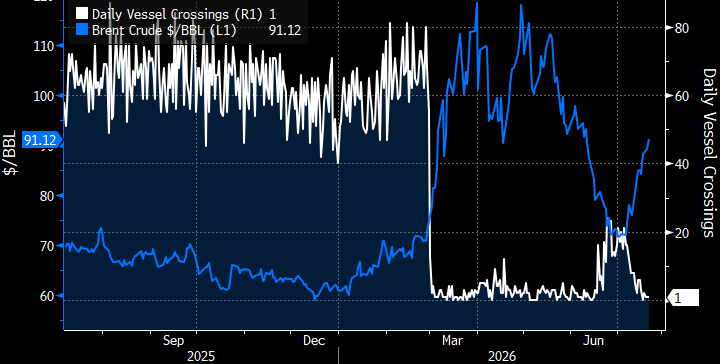 Source: Bloomberg
ADP Weekly Change in Private Payrolls – Fourth Straight Week of Declining Job Growth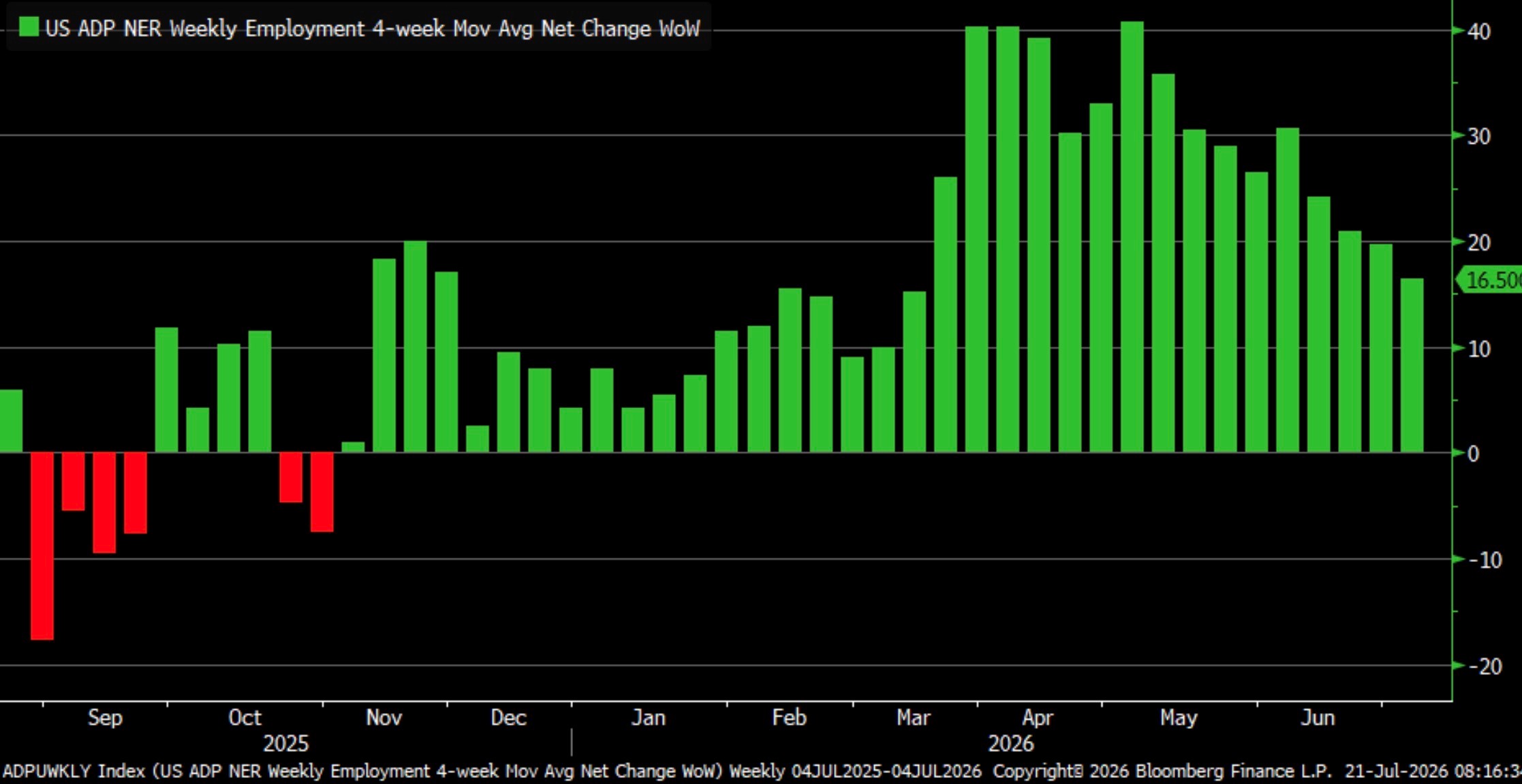
Source: ADP
ADP Monthly Payrolls vs. BLS Private Payrolls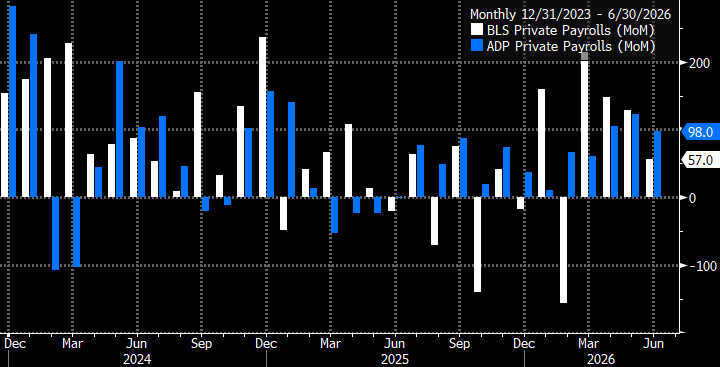 Source: ADP and BLS
Securities offered through the SouthState | DuncanWilliams 1) are not FDIC insured, 2) not guaranteed by any bank, and 3) may lose value including a possible loss of principal invested. SouthState | DuncanWilliams does not provide legal or tax advice. Recipients should consult with their own legal or tax professionals prior to making any decision with a legal or tax consequence. The information contained in the summary was obtained from various sources that SouthState | DuncanWilliams believes to be reliable, but we do not guarantee its accuracy or completeness. The information contained in the summary speaks only to the dates shown and is subject to change with notice. This summary is for informational purposes only and is not intended to provide a recommendation with respect to any security. In addition, this summary does not take into account the financial position or investment objectives of any specific investor. This is not an offer to sell or buy any securities product, nor should it be construed as investment advice or investment recommendations.


