
PPI follows CPI with a Hot September

- The risk-off selling in AI-related equities that started on Wednesday continued yesterday but the early selling was followed by some dip buying which softened the impact and speaks to the inclination of traders to continue with a theme until it’s obvious the theme has played out. Despite some equivocation in equities yesterday, the flight-to-safety trade in Treasuries continued with solid gains across the maturity curve, but particularly in longer duration bonds. This buying continued despite another day of hotter-than-expected inflation numbers, this time supplied by PPI and continuing with today’s Import/Export Prices. While Treasuries have retraced some of their recent yield highs, the Fed is seemingly intent on pausing in October, but rate hikes are still expected in December with odds standing at 90%. In an overnight address in Bangkok, Fed Chair Warsh reinforced the notion of an October pause. Next week should prove quieter with the Fed in its pre-meeting silence and a sparse economic calendar; thus, trading direction will continue to take its cues from equities and, of course, geo-political headlines. Currently, the 10yr is yielding 5.11%, up 2bp, while the 2yr is yielding 4.76%, up 1bp on the day.
- The penultimate September inflation report was delivered this morning with Import/Export Prices. The Import Price Index increased 1.1% vs. 0.9% forecasted and August’s downwardly revised 0.5% result (originally reported as 0.7%). The YoY rate increased from an already stout 7.0% to 8.1%. That’s the highest YoY pace since mid-2021. Ex-petroleum, import prices rose 0.7% vs. 0.6% expected and more than the 0.6% gain in August. Monthly gains peaked at 0.9% in April. Those are the highest monthly prints since 2022 when they peaked at 1.5%. Monthly price gains by country were as follows: China (+0.7%, largest monthly gain since 2021 with YoY at 3.1%; driven mostly by computer-related products), Japan (+0.6%, 1.1% YoY), Mexico (+0.6%), Canada (1.3%, the first month with an increase following two months of declining prices).
- Yesterday brought us September PPI and like CPI the day before, it came in hotter than expectations and that heat was generated from the energy spike that contributed the bulk of the pricing spike. In addition, the line items that feed into PCE were generally firm, especially airfares, which may push up PCE estimates, and with core PCE estimates at 0.3% MoM prior to the report a 0.4% monthly gain is possible. That said, the September PCE numbers arrive the day after the October FOMC meeting, so just another reason to expect an October pause.
- Also yesterday, the September Advance Retail Sales Report beat expectations on the headline number but after stripping away the impact of higher gas prices it was merely a mediocre month. Keep in mind too, this report is not inflation-adjusted which skews the results given the spike in energy costs. Headline sales increased 0.8% MoM which easily beat the 0.3% expectation, but it trailed the solid 1.3% August increase. The softer sales ex-gas was revealed with Sales ex Autos and Gas up 0.2%, matching expectations but well behind the 1.1% surge in August.
- The core spending category, the so-called Control Group, posted a skinny 0.1% increase vs. 0.3% expected and trailing the 1.2% in August, which was the largest control group gain since September 2024. In summary, it was a so-so spending report after accounting for the gasoline spike, but it did follow a surprisingly strong August. Thus, we’re not alarmed yet at the softening in the ex-gas results, but we’ll be keen to see if October delivers a bounce from the consumer. If that doesn’t happen the softening in September could signal more than just a one-month pause.
- Finally, in another example of ongoing labor market resilience, the Weekly Initial Jobless Claims Report remained docile with 199 thousand new claims for the week ending October 10. The latest claims figure was a thousand lower than the 200 thousand expectation and thousand more than the prior week’s 198 thousand. The four-week moving average was 198.50 thousand vs. 198.25 thousand the prior week. The almost unchanged average speaks to the consistent results we’ve been seeing in this report for months. Continuing Claims were 1.710 million for the week ending October 3rd vs. 1.709 million consensus and 1.714 thousand the prior week (revised down from 1.716 million). The continuing claims print was the lowest since early 2023. Suffice it to say the low-fire environment continues for yet another week.
Odds for an October Hike Still Low at 27%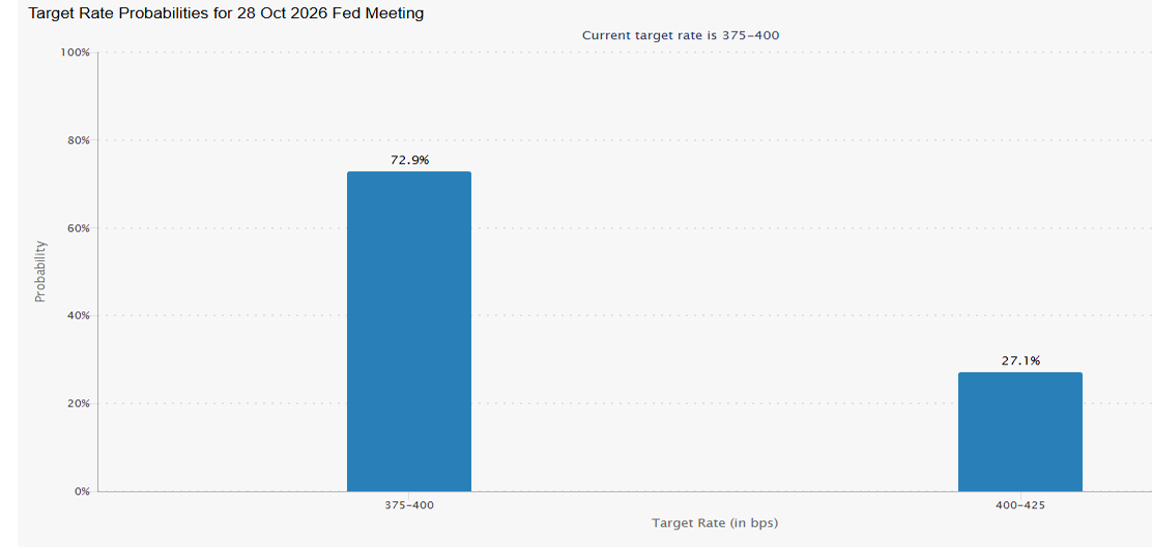 Source: CME Group
PPI Line Items that Feed into PCE – Airfares and Nursing Home Care Could Pressure PCE Estimates Higher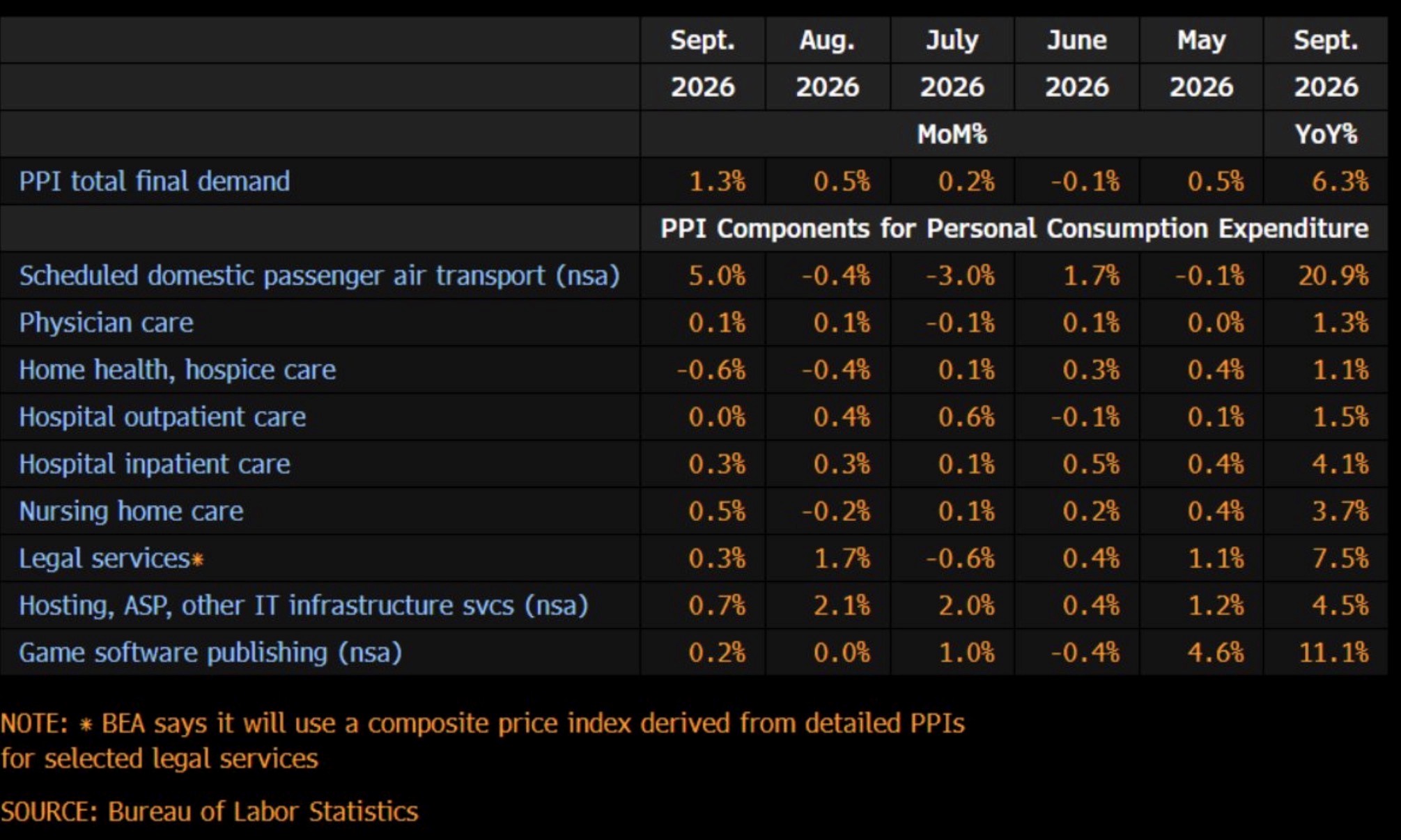 Source: BLS
September PPI and CPI (YoY)– Moving in the Wrong Direction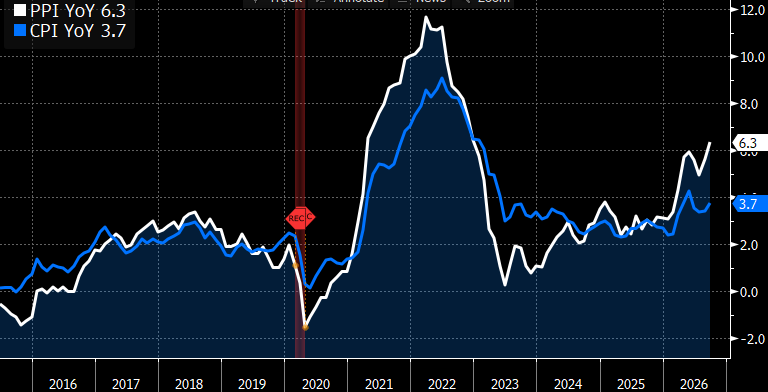 Source: BLS
Retail Sales (YoY) – Boosted by Gas Price Spike, Inflation-Adjusted Spending not so Hot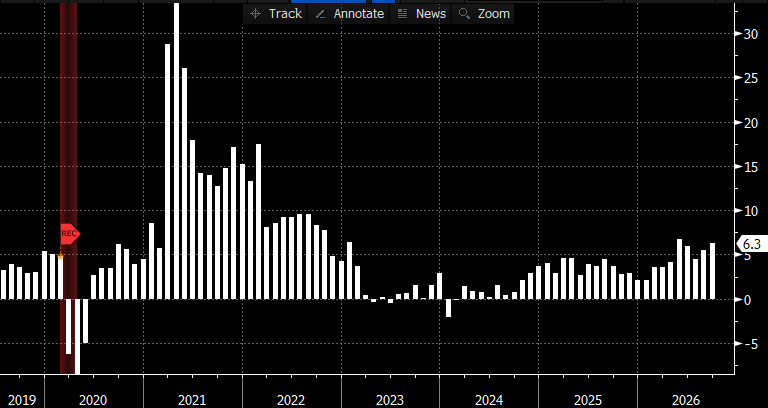 Source: US Census Bureau
Securities offered through the SouthState | DuncanWilliams 1) are not FDIC insured, 2) not guaranteed by any bank, and 3) may lose value including a possible loss of principal invested. SouthState | DuncanWilliams does not provide legal or tax advice. Recipients should consult with their own legal or tax professionals prior to making any decision with a legal or tax consequence. The information contained in the summary was obtained from various sources that SouthState | DuncanWilliams believes to be reliable, but we do not guarantee its accuracy or completeness. The information contained in the summary speaks only to the dates shown and is subject to change with notice. This summary is for informational purposes only and is not intended to provide a recommendation with respect to any security. In addition, this summary does not take into account the financial position or investment objectives of any specific investor. This is not an offer to sell or buy any securities product, nor should it be construed as investment advice or investment recommendations.


