
September Jobs Report – Weak Job Gains, Unemployment Up a Tenth to 4.2%

- September nonfarm payrolls rose only 29k, missing the 85k expected and the 133k in August (revised down from 162k). Private sector jobs rose 46k vs. 80k expected and 89k in August. Two-month revisions subtracted 60k jobs from previous estimates which, after a brief reversal in August, returns revisions to the downside which has been the prevailing trend for more than a year.
- Job gains were in the areas we’re accustomed to seeing, namely healthcare at +23k, construction added 11k (think data center construction here), and 10k in Leisure and Hospitality. Categories losing jobs were government off -17k and temporary help losing -11k. Gains have been strongest in healthcare as the Boomer generation ages into home healthcare and assisted living while AI demand is keeping construction activity strong as well, but off from the August gains. Those two sectors are expected to continue to drive job growth for the foreseeable future.
- The Household Survey, as opposed to the Establishment survey which produces the headline job growth number, generates the unemployment rate, labor force participation rate, etc. The surprise in August was a rebound in the labor force, (those employed and those not working but actively looking for employment), and that continued in September with the labor force increasing by 485k. The survey also reported a 78 thousand increase in unemployed persons as some of those new entrants to the labor force were still looking for work. So, for the second straight month the Household Survey was strong, exceeding the Establishment Survey’s modest results.
- The modest increase in unemployed led to a one-tenth increase in the unemployment rate to 4.2% (4.18% unrounded vs. 4.09% in August). The number of unemployed workers decreased by 496k over the last year, while the number of employed decreased 504k. Meanwhile, over the past year the labor force has shrunk by 999k. Essentially, very little change in the labor force, unemployed and employed over the last year. For September at least, the increased labor force led to the Labor Force Participation Rate increasing from 61.6% to 61.8%. A year ago, it was 62.5%, so slippage in participation in the last year which is partly a result of boomers retiring out of the work force, but also a limited number of new entrants as slowed immigration has limited gains.
- Meanwhile, Average Hourly Earnings rose 0.1% MoM, missing expectations, and off from the 0.3% August gain. The year-over-year pace dipped a tenth to 3.0%, missing the 3.1% expectation, and the lowest YoY rate since 2021. Average weekly hours, however, remained at 34.4 hours, besting the 34.3 hours expectation. Still, with annual wage gains around 3% and PCE inflation also in the low 3% level real income growth is essentially flat. One would think maintaining consumption gains in that environment will be a challenge, but that doesn’t consider the sizeable wealth accumulated by the top quartile of consumers and that remains a sizeable source of fuel for continued spending. At least the Fed doesn’t have to add wage-push inflation to its price stability fight.
- Bottom line: a disappointing month for job gains, and with the increased unemployment rate (albeit slight) and wage growth moderating it puts the labor market in a weaker light than thought coming out of the stronger August report. Having said that, even with the moderation from the August numbers, the Fed can continue to focus on its inflation mandate. The weaker report moved odds for an October hike down to 16%. The September CPI release will be on October 18, which will be the key report, but it would have to be an exceptionally hot print to put a rate hike back on the table for the October 28 FOMC meeting.
September Job Gains Slow and August Strength Revised Lower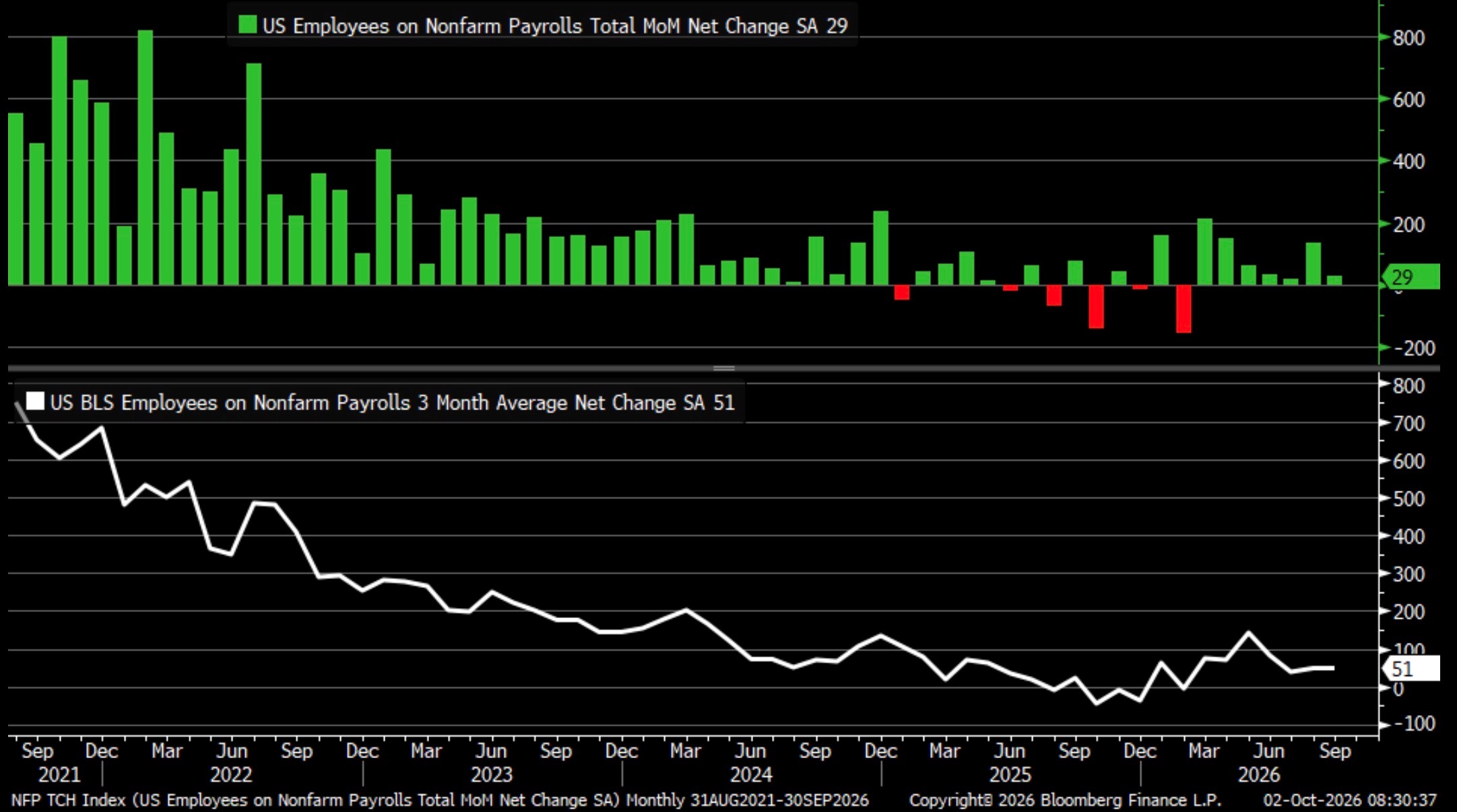
Source: BLS
Average Hourly Earnings (YoY) Dips a Tenth to 3.0% – Lowest Since 2021 Covid Recovery 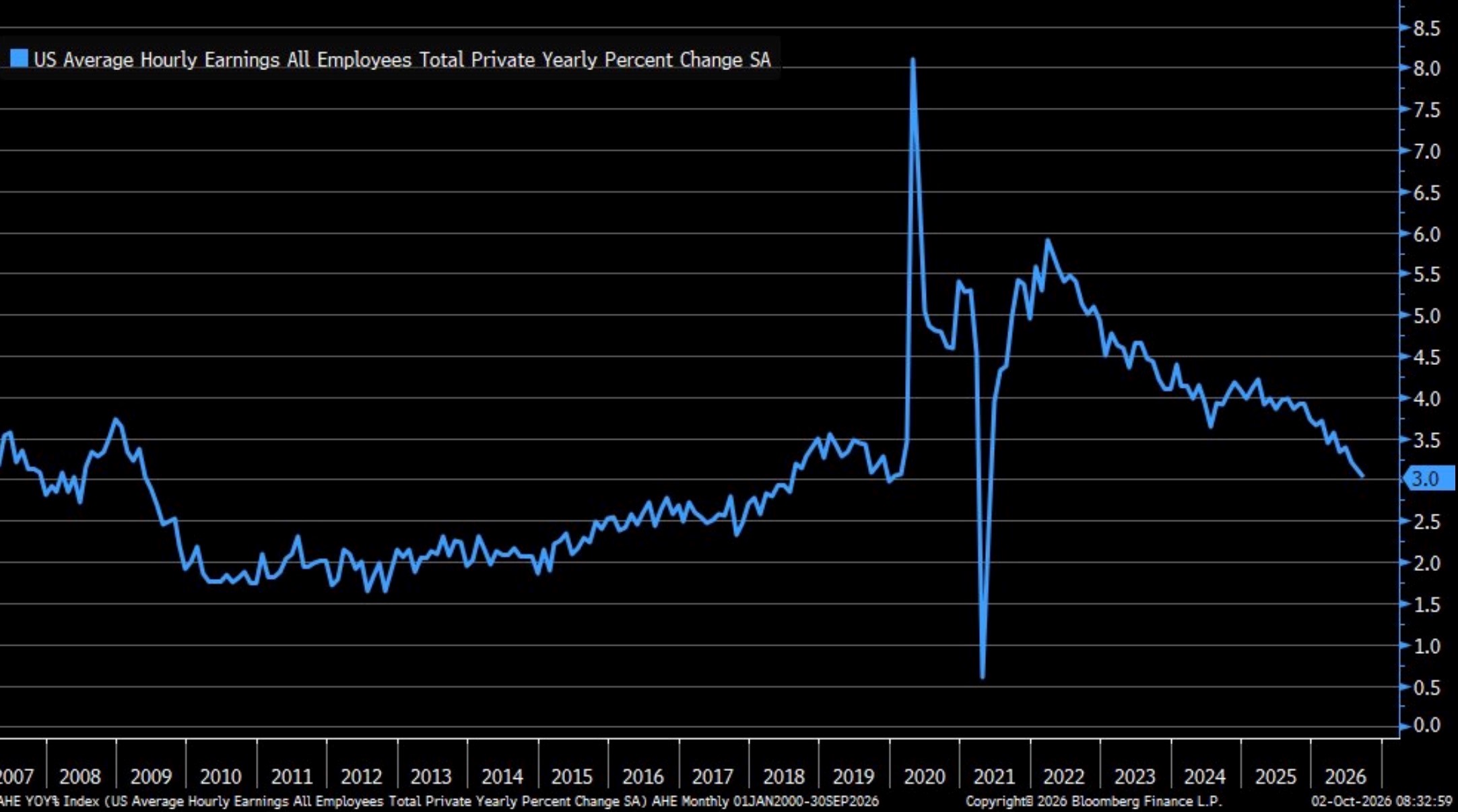 Source: BLS
A Positive – Labor Force Participation Rate Increased for Second Straight Month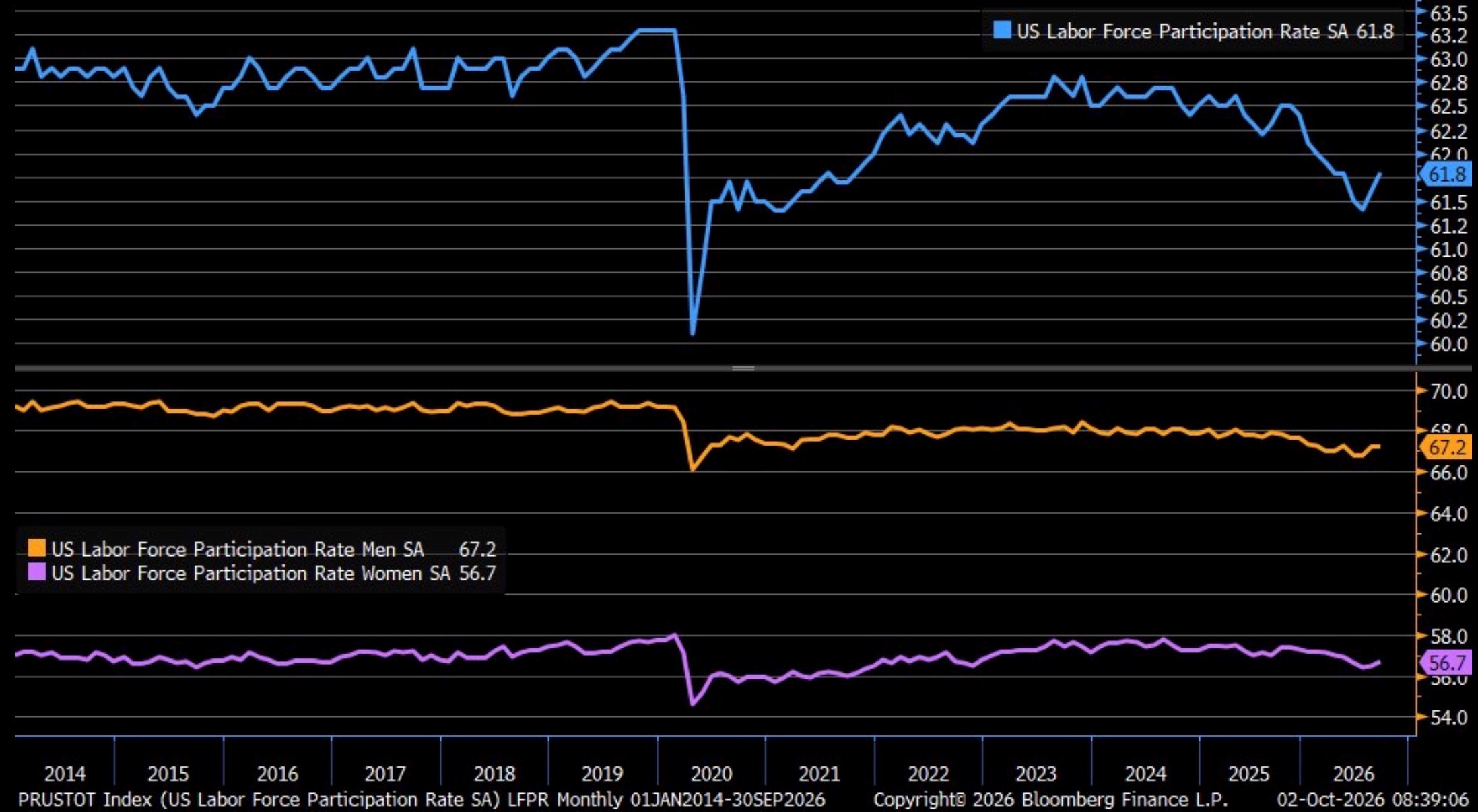 Source: BLS
Securities offered through the SouthState | DuncanWilliams 1) are not FDIC insured, 2) not guaranteed by any bank, and 3) may lose value including a possible loss of principal invested. SouthState | DuncanWilliams does not provide legal or tax advice. Recipients should consult with their own legal or tax professionals prior to making any decision with a legal or tax consequence. The information contained in the summary was obtained from various sources that SouthState | DuncanWilliams believes to be reliable, but we do not guarantee its accuracy or completeness. The information contained in the summary speaks only to the dates shown and is subject to change with notice. This summary is for informational purposes only and is not intended to provide a recommendation with respect to any security. In addition, this summary does not take into account the financial position or investment objectives of any specific investor. This is not an offer to sell or buy any securities product, nor should it be construed as investment advice or investment recommendations.


