
Warm October PPI Follows Hot CPI

- While the Nvidia spy scandal is hogging most of the attention in financial markets, not to mention the larger national security risks, we’re left to ponder more mundane items like will the Fed hike 50bp in December, or will they elect to go at a swifter pace? We think they hike 25bp in December and put January squarely in play. The bad news is that we anticipate more inflationary pressure to arrive in the first quarter, a seasonally strong inflationary period, as businesses that resisted price hikes this year, look to 2027 to adjust those prices higher. Thus, a hike in January could be followed by more if the higher inflationary scenario does play out. We still think the terminal rate will be the 4.50% – 4.75% range in this hiking cycle but it wouldn’t surprise us if another hike beyond that might become necessary. Currently, the 10yr is yielding 5.14%, up 4bp, while the 2yr is yielding 4.86%, unchanged on the day.
- This morning’s October PPI report was not exactly like CPI earlier in the week coming in a touch cooler-than-expected, but with YoY levels that remain historically high and with more signs that price pressures are spreading beyond energy and energy-adjacent items. A possible positive for the upcoming PCE numbers for October, some line items that feed into PCE were not hot and some categories saw price declines which may nudge down PCE estimates. With core PCE estimates at 0.34% MoM prior to the report a 0.4% (rounded) monthly gain seems slightly less possible. If a 0.4% happens, expect a December rate hike to be followed by one in January.
- Final Demand PPI increased 0.3% vs. 1.4% in September and 0.4% expected, while PPI ex-food and energy and trade rose 0.5% vs. 0.5% prior month and 0.4% expected. With the warmish October results, YoY levels moved higher with the headline measure at 6.5% vs. 6.3% in September and 6.6% expected. The YoY rate on ex-food, energy, and trade was 4.9% vs. 5.0% prior month and 4.8% expected.
- Changes in monthly PPI tend to lead CPI, so the moderation in month-over-month numbers argues for less upcoming CPI price pressure but the level is still elevated and not in the range that will push CPI, or PCE, closer to the 2% target. The final piece that will impact PCE comes next Tuesday with the October Import/Export Price report. That report is not as consequential as the CPI/PPI duo for refining PCE estimates but it has been trending higher since July and if that continues it will add another upward bias to those PCE estimates.
- Yesterday, existing home sales for October fell to a 16-year low as a perfect storm of negative news on mortgage rates and inflation deterred would-be buyers. Contract closings in October decreased 5.5% to an annualized rate of 3.75 million. Sales plummeted in the West to the slowest pace in data back to 1999 and hit the lowest levels in more than a decade in both the South and Midwest. The housing market looks increasingly grim as discouraged buyers grapple with mortgage rates above 7% and stubbornly high inflation across the economy. The 30-year rate has eased in recent weeks after hitting an almost three-year high in early October.
- At the same time, the weak demand may eventually help improve affordability. The inventory of existing homes continued to rise last month, even as the number of new listings weakened. That suggests price relief may be building. National Association of Realtors Chief Economist Lawrence Yun said in a statement that, “Based on the current underwhelming home sales pace at a time of consistent job growth, there could be sizable pent-up demand if mortgage rates decline,” With the Fed on heightened inflation watch, and rate hikes coming, longer maturities, where mortgage rates are priced, may find a friendlier environment in coming months as duration buyers accept that the Fed will bring inflation back to its 2% target. That’s the hope anyway!
- Next week brings more housing-related data but the headline release will be October Retail Sales. Expectations are that sales advanced a skinny 0.1% vs. 0.8% in September while sales ex-gas and autos are expected to 0.4% vs. 0.2% the prior month. Control Group sales (core sales) are expected up 0.4% vs. 0.1% in September. So, a weaker headline off soft car sales but “core sales” are expected to rebound from a soft September. It’s probably too soon to see a significant drop in October consumption as a consequence of the recent equity selling, but the report will be scrutinized for any early hints or signs that some slowing is taking place with a more significant drop-off possible in November’s numbers.
Odds for a January Hike Over 75%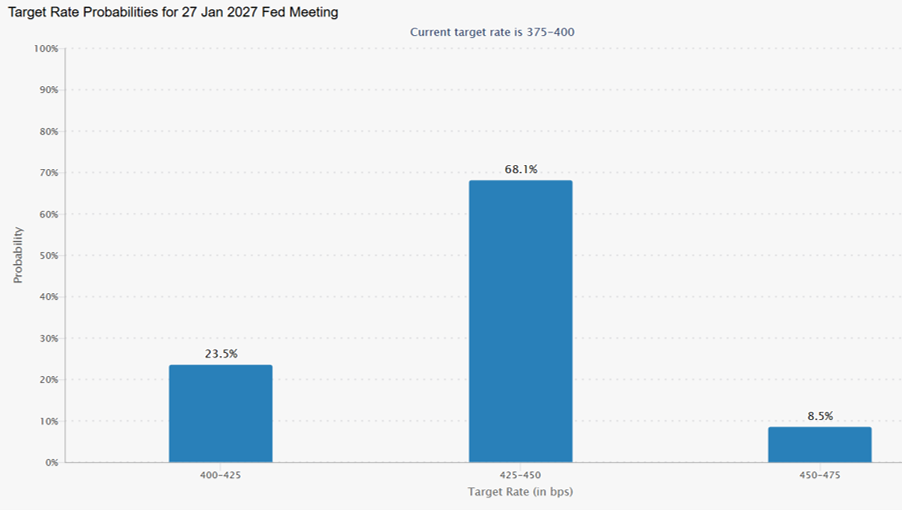 Source: CME Group
PPI for October – YoY Levels Still Historically High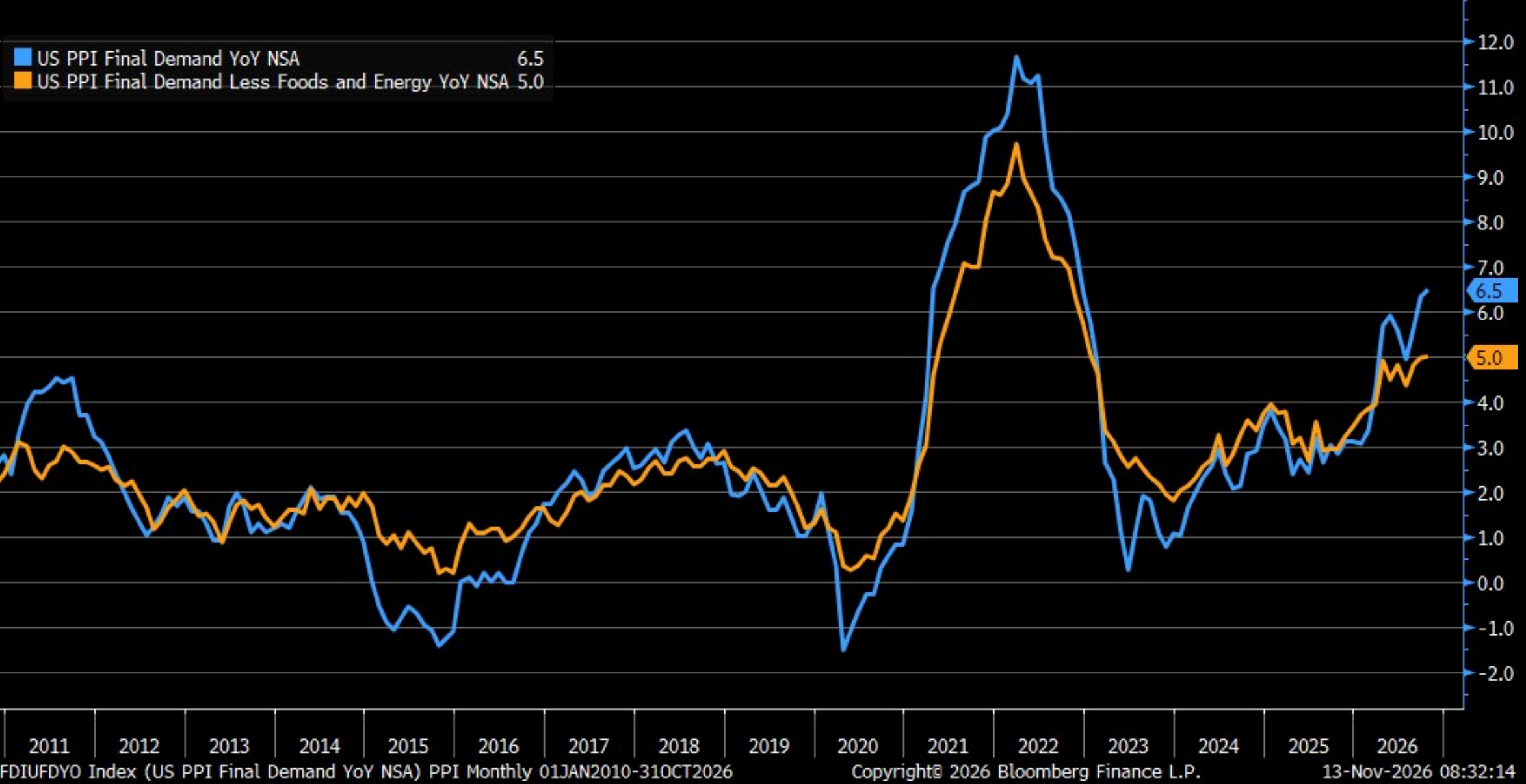 Source: BLS
PPI Line Items that Feed into PCE – Airfares and Nursing Home Care Could Pressure PCE Estimates Higher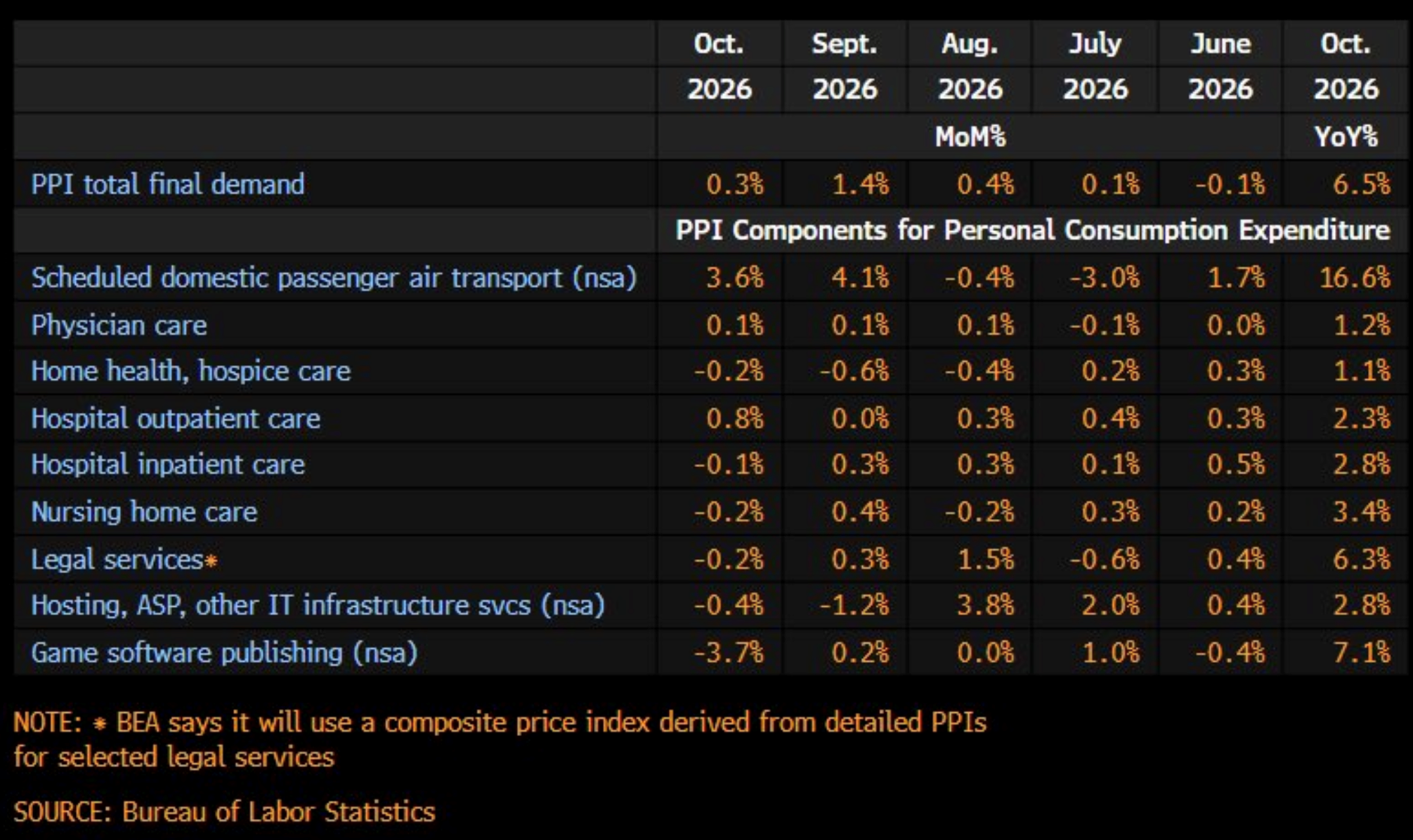 Source: BLS
Existing Home Sales in October Fall to 16-Year Low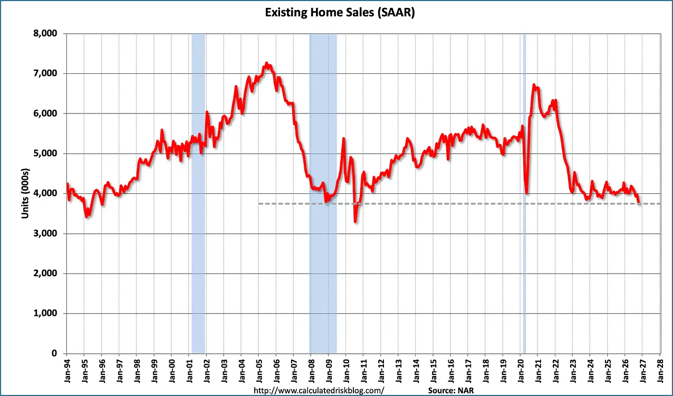 Source: BLS
Securities offered through the SouthState | DuncanWilliams 1) are not FDIC insured, 2) not guaranteed by any bank, and 3) may lose value including a possible loss of principal invested. SouthState | DuncanWilliams does not provide legal or tax advice. Recipients should consult with their own legal or tax professionals prior to making any decision with a legal or tax consequence. The information contained in the summary was obtained from various sources that SouthState | DuncanWilliams believes to be reliable, but we do not guarantee its accuracy or completeness. The information contained in the summary speaks only to the dates shown and is subject to change with notice. This summary is for informational purposes only and is not intended to provide a recommendation with respect to any security. In addition, this summary does not take into account the financial position or investment objectives of any specific investor. This is not an offer to sell or buy any securities product, nor should it be construed as investment advice or investment recommendations.


